Cockroaches & ants
Inspection of warm equipment voids, drains, beverage points, stores and other food- or moisture-related harbourage.
- Monitoring
- Targeted control
- Hygiene actions
Discreet, inspection-led pest management for Lagos restaurants, hotels and hospitality premises—scheduled around the way you serve guests.
One cockroach near the kitchen. One guest who sees something they shouldn't. One review that describes something you can't take back.
In hospitality — cleanliness isn't just about appearance. It's about the confidence your customers carry when they walk in and the impression they carry when they leave.
Our pest management programmes help restaurants and hotels stay ahead of problems before a guest finds them first.
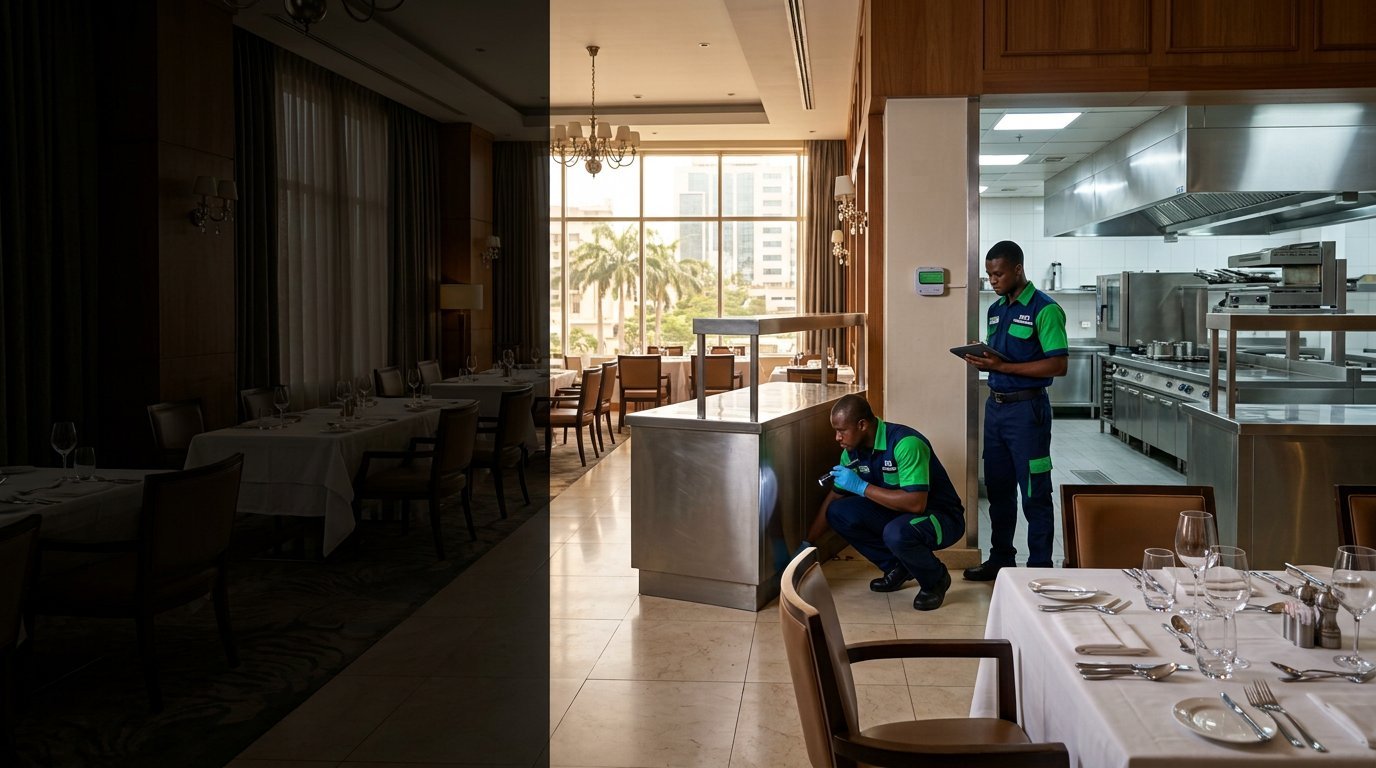
Pest pressure often begins in deliveries, drains, storage, service routes and quiet voids before it reaches a guest-facing area.
Inspection of warm equipment voids, drains, beverage points, stores and other food- or moisture-related harbourage.
Structured review of delivery doors, loading areas, waste, ceilings, stores and external access around the premises.
Source-focused checks around waste, floor drains, organic build-up, bars, wash-up zones and external refuse areas.
Support for beetles, weevils and moths affecting dry goods, grains, spices and vulnerable stock.
Discreet room inspection, containment guidance and coordinated treatment where bed bug activity is confirmed or strongly suspected.
Source reduction and targeted support around gardens, pool surrounds, drains, event spaces and staff areas.
Your programme should make it easier to manage risk without creating unnecessary disruption for guests, staff or food operations.
Review monitoring points, vulnerable zones, activity evidence and emerging conditions.
Coordinate visits around approved operating, closing and low-occupancy windows.
Match the control method to the pest, location and sensitivity of the area.
Document observations and practical actions for kitchen, housekeeping and facilities teams.
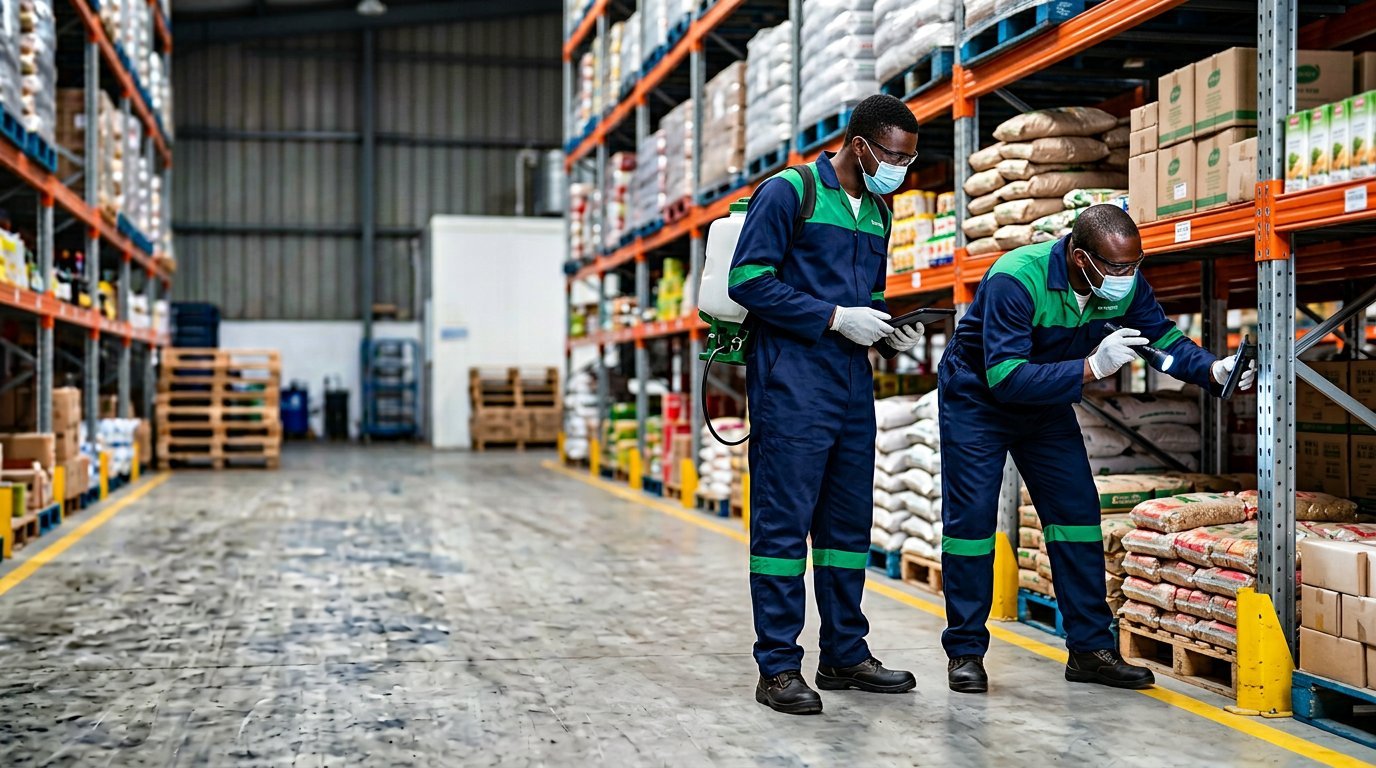
Restaurants: focus on deliveries, dry stores, preparation, cooking lines, wash-up zones, drains, refuse and customer areas.
Hotels: extend the programme across guest rooms, housekeeping, linen, kitchens, restaurants, bars, event spaces, stores and grounds.
Where access and the treatment method allow it, visits can be coordinated around closing periods, low-occupancy windows or approved back-of-house access times. Preparation and re-entry requirements still apply.
Yes. A hotel scope may include guest rooms, housekeeping stores, linen areas, kitchens, restaurants, bars, refuse points, loading areas, drainage and external grounds according to the site survey.
Preserve useful evidence, record the exact room or area and time, avoid moving potentially affected items, and contact the responsible manager and pest provider. The response should be discreet, documented and based on inspection.
Frequency depends on food activity, occupancy, deliveries, building condition, previous pest history and risk expectations. A busy kitchen or full-service hotel may require more frequent monitoring than a lower-risk site.
Arrange a site discussion before a visible pest problem becomes a guest memory, complaint or review.