Termites & timber
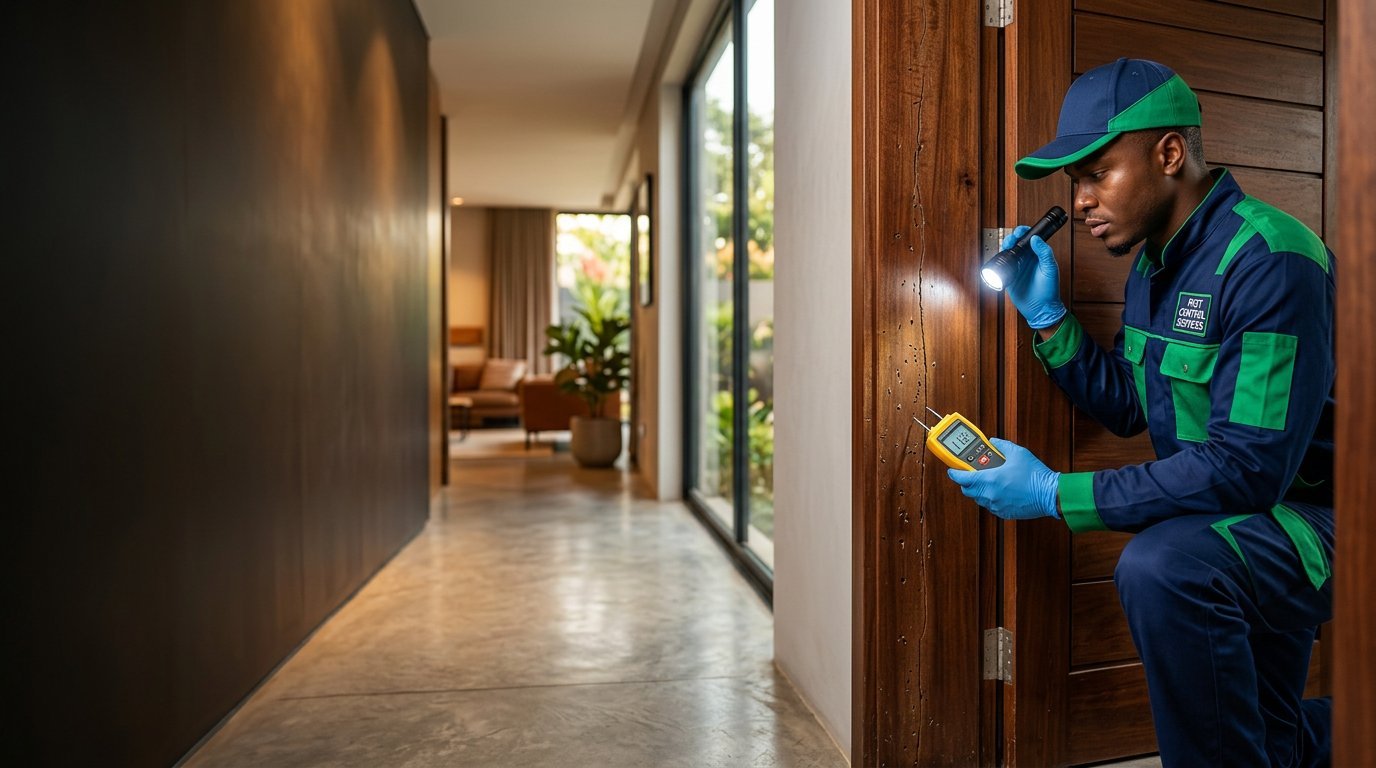
Inspection of wooden frames, furniture, roof timbers and other vulnerable structural or stored materials.
- Mud-tube checks
- Timber assessment
- Treatment options
Inspection-led pest management for Lagos schools, timed around holidays, resumption dates and the way your campus operates.
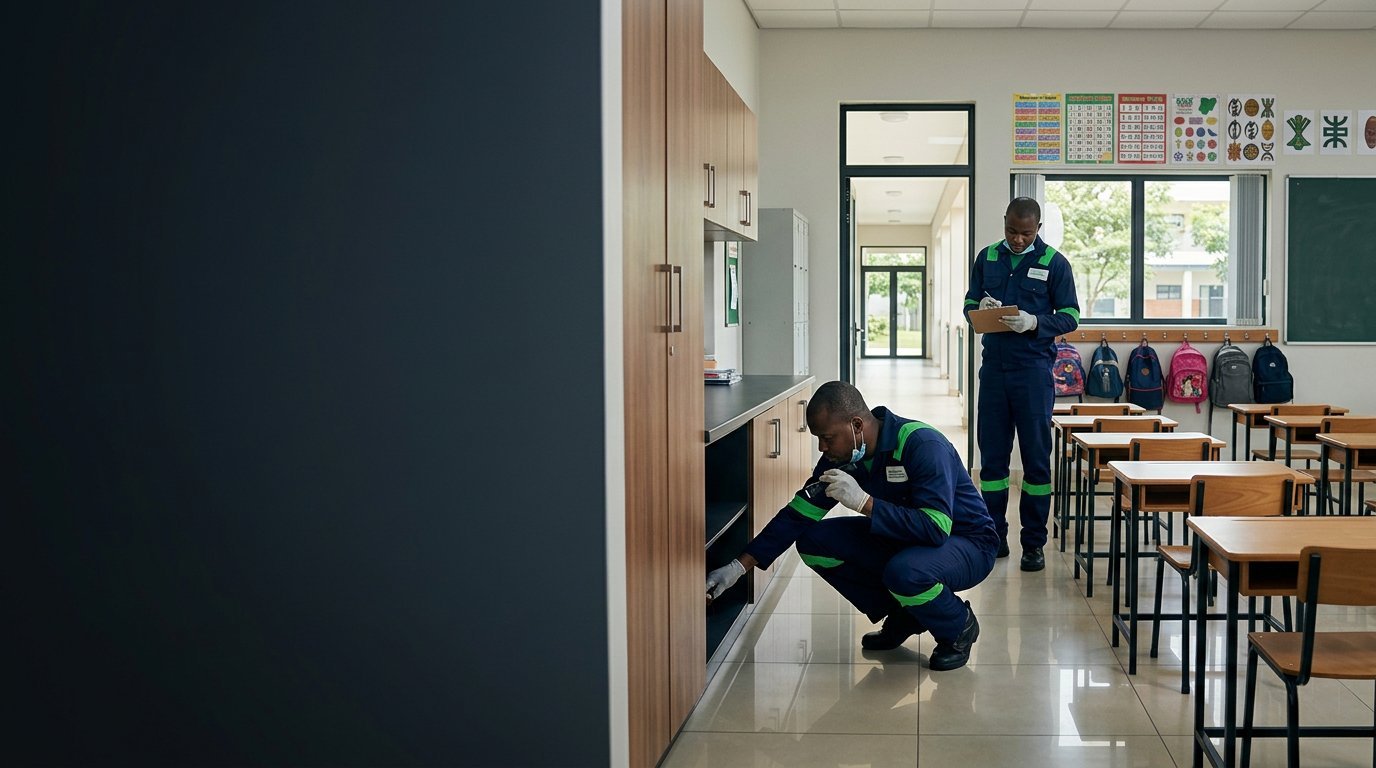
The school looks ready. The classrooms are painted. The desks are repaired. But while it was empty — termites were quietly working on wooden structures. Cockroaches settled into the kitchen. Rodents found the storage area comfortable. Mosquitoes found the drainage ideal. None of them got the memo that school is resuming.
Our school pest management programme gives you the chance to handle this properly — before resumption, before parents notice, before it becomes a problem you're managing instead of preventing.
A useful programme considers how each area is used instead of treating the whole campus as though every space carries the same risk.
Inspection of wooden frames, furniture, roof timbers and other vulnerable structural or stored materials.
Cockroach, fly, ant and stored-product pest risks around food preparation, service, cleaning and dry-goods storage.
Rodent access, shelter and food opportunities around stores, refuse points, delivery areas and quiet service routes.
Standing water, blocked drains, shaded vegetation and containers that can sustain mosquito pressure around the campus.
Inspection-led support for bed bugs and other pests in sleeping, rest and care areas where preparation must be coordinated carefully.
Checks around cabinetry, equipment, records, ceilings, service entries and low-traffic areas where activity may go unnoticed.
Treatment is only one step. The schedule should leave time for inspection, preparation, required repairs and verification before normal activity resumes.
Review buildings, food areas, stores, hostels, drainage, waste and known pest history.
Identify urgent activity and the building or operational conditions supporting it.
Complete targeted work while the school coordinates cleaning, proofing and repairs.
Review outcomes, document remaining actions and agree any follow-up schedule.
Appointments can be coordinated around holidays, weekends and approved access windows. The final timing depends on the scope, product directions, preparation requirements and any required re-entry period.
School holidays, half-term breaks and the period before resumption are useful windows because inspection, preparation, treatment and any required re-entry interval can be coordinated before students return. The right timing still depends on the pest and method.
Yes. The scope can cover teaching blocks, administrative areas, canteens, food stores, hostels, libraries, sick bays, refuse points, drains and external grounds according to the risks identified during inspection.
The school should follow its own communication and safeguarding procedures. We provide treatment-specific preparation and re-entry information that responsible school personnel can use when coordinating staff, contractors and occupants.
Not always. Termites, rodents, mosquitoes and sites with food service or drainage pressure may require follow-up, proofing, monitoring or a scheduled programme. The inspection should determine a realistic frequency.
Schedule the inspection early enough to identify problems, coordinate treatment and complete the right next steps before students return.